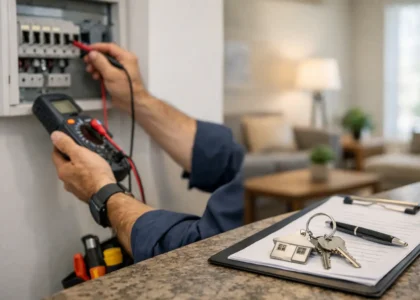


One missed gas check can create a far bigger problem than an expired certificate. For landlords, gas safety certificate landlord requirements are not a box-ticking exercise. They sit at the centre of tenant safety, legal compliance and your ability to manage risk properly.
If you own two or three rental properties, this is where self-management often starts to feel heavier than expected. Dates need tracking, engineers need coordinating, tenants need access arrangements, and records need to be issued correctly. Get it right and the tenancy runs smoothly. Get it wrong and you expose yourself to enforcement action, delays and avoidable stress.
What landlords are legally required to do
If your property has any gas appliance, pipework or flues that you are responsible for, you must arrange an annual gas safety check. This check must be carried out by a Gas Safe registered engineer. Once completed, the engineer issues the Gas Safety Record, which many landlords and tenants refer to as the gas safety certificate.
The legal duty is straightforward in principle. You must maintain gas appliances and flues in a safe condition, arrange a safety check every 12 months, keep records, and provide the latest record to tenants within the required timescales.
That sounds simple, but the pressure usually comes from administration rather than the rule itself. A valid certificate is not enough on its own if it was late, not served properly, or relied on checks that did not cover all relevant appliances.
Gas safety certificate landlord requirements in practice
The main gas safety certificate landlord requirements can be broken into timing, certification and record handling.
First, the check must be renewed every year. There is some flexibility on timing because landlords can carry out the new check up to two months before the current certificate expires while keeping the same renewal date pattern. That matters if you want a stable compliance calendar rather than a drifting one.
Second, the inspection must be completed by the right professional. A general tradesperson is not enough. The engineer must be Gas Safe registered and qualified for the type of work involved.
Third, you must give a copy of the current Gas Safety Record to an existing tenant within 28 days of the check. For a new tenant, they should receive the current record before they move in. You must also keep your own records for at least two years, though many landlords sensibly retain them for longer as part of a full property compliance file.
Which properties and appliances are covered
Most private rented homes with a gas supply will fall within these rules, whether that is a flat, house or converted property. The duties usually apply where the landlord provides the appliance or remains responsible for the pipework and flues.
Typical examples include boilers, gas fires, cookers and any connected flues. If a tenant has installed their own gas appliance and is fully responsible for it, your obligations may differ. Even then, assumptions are risky. Responsibility should be clear in writing, and any uncertainty should be checked properly rather than guessed.
The common mistake is thinking the certificate only concerns the boiler. In reality, the check should cover all relevant landlord-owned gas appliances and associated flues. If one appliance is missed, you may not have the protection you think you have.
Access, tenants and failed appointments
Landlords are expected to take reasonable steps to complete the annual check, even when access is difficult. If a tenant ignores messages or repeatedly cancels, that does not mean you can simply leave the certificate to lapse and move on.
You should keep a clear record of contact attempts, proposed appointment times and any refusal or no-access issues. Written communication matters here. If the position is ever questioned, a proper audit trail helps show that you acted responsibly and tried to meet your legal duty.
That said, relying on last-minute chasing is poor practice. The sensible approach is to start early, give tenants enough notice and use a system that tracks every due date before it becomes urgent. This is one reason smaller landlords often hand compliance administration to a managing agent. The rule is annual, but the real job is continuous diary management.
What happens if the certificate expires
An expired certificate should be treated as a serious compliance failure. It can expose you to enforcement action and create wider legal complications around property management. It also raises an obvious question if a tenant complains, a repair issue emerges or an incident occurs.
The right response is to arrange the check immediately and document the steps taken. But a late certificate does not erase the fact that there was a gap. Landlords sometimes assume that once the new record is issued, the problem has gone away. It has not. The breach may still matter, particularly if there is a pattern of poor compliance.
There is also a practical business issue. If your portfolio is meant to deliver dependable income, missed certification undermines the control behind that income. It suggests your property systems are reactive rather than managed.
Why the timing of service matters
Serving the Gas Safety Record correctly is not just admin. It is part of the legal framework around letting residential property.
For new tenancies, the current certificate should be given before the tenant takes occupation. For existing tenants, the updated record must be provided within 28 days of the annual check. Landlords should also be able to show how and when the record was served, whether by hand, by post or through an agreed electronic method.
This is where paperwork failures often happen. The inspection gets done, the engineer sends the record, and the landlord assumes the matter is finished. But if the tenant never receives it, your process is incomplete. Compliance is not only about arranging the check. It is about closing the loop properly.
Gas safety certificate landlord requirements and wider compliance
Gas safety certificate landlord requirements do not sit in isolation. They form part of a wider compliance picture that includes electrical safety, smoke and carbon monoxide alarms, deposit handling, right to rent checks, prescribed information and tenancy documentation.
That matters because landlords rarely get into difficulty through one dramatic mistake. More often, problems build through a series of small gaps – a late certificate here, missing paperwork there, an outdated record stored in the wrong place. Each issue looks manageable on its own. Together, they create exposure.
For landlords with a small portfolio, the trade-off is clear. Self-management can save a fee on paper, but only if you have the time and systems to control deadlines, tenant communication and records properly. If you are balancing a day job, family commitments and multiple renewals across different properties, those savings can disappear quickly when something is missed.
Common mistakes landlords make
The most common error is leaving the renewal too late. Engineers may have limited availability, tenants may not respond quickly, and what should have been a routine booking suddenly becomes a compliance problem.
Another mistake is using the wrong language internally. Many landlords talk about needing the certificate, when the real task is broader: maintain the appliances, complete the annual check, issue the record and keep evidence. Focusing only on the piece of paper can lead to weak processes behind it.
A third issue is poor record storage. If certificates, tenancy files and service evidence are scattered across emails and folders, it becomes difficult to prove compliance when you need to. Good management is as much about retrieval as it is about completion.
How to keep gas compliance under control
The practical answer is structure. Set renewal reminders well ahead of expiry. Use only Gas Safe registered engineers. Keep every certificate in a central file. Record when documents were sent to tenants. Where access is difficult, log every call, message and notice.
For landlords who want a more hands-off model, professional management can remove much of the operational burden. A compliance-led approach means the dates are monitored, appointments are arranged, documents are issued and records are retained without the landlord having to chase each stage themselves. That is often the difference between owning rental property and truly controlling it.
For London landlords managing a small portfolio, that control matters. Regulations do not become easier because you only own two or three properties. In many cases, smaller landlords feel the pressure more because they do not have internal systems or staff to absorb the admin. That is exactly why agencies such as Mavericks Management focus so heavily on compliance discipline rather than just collecting rent.
The best way to think about gas safety is simple. It is not an annual errand. It is part of the operating standard of your rental business. When that standard is strong, your property stays safer, your records stay cleaner, and your income becomes far less vulnerable to avoidable mistakes.
A reliable rental portfolio runs on control, not reminders scribbled in a diary.